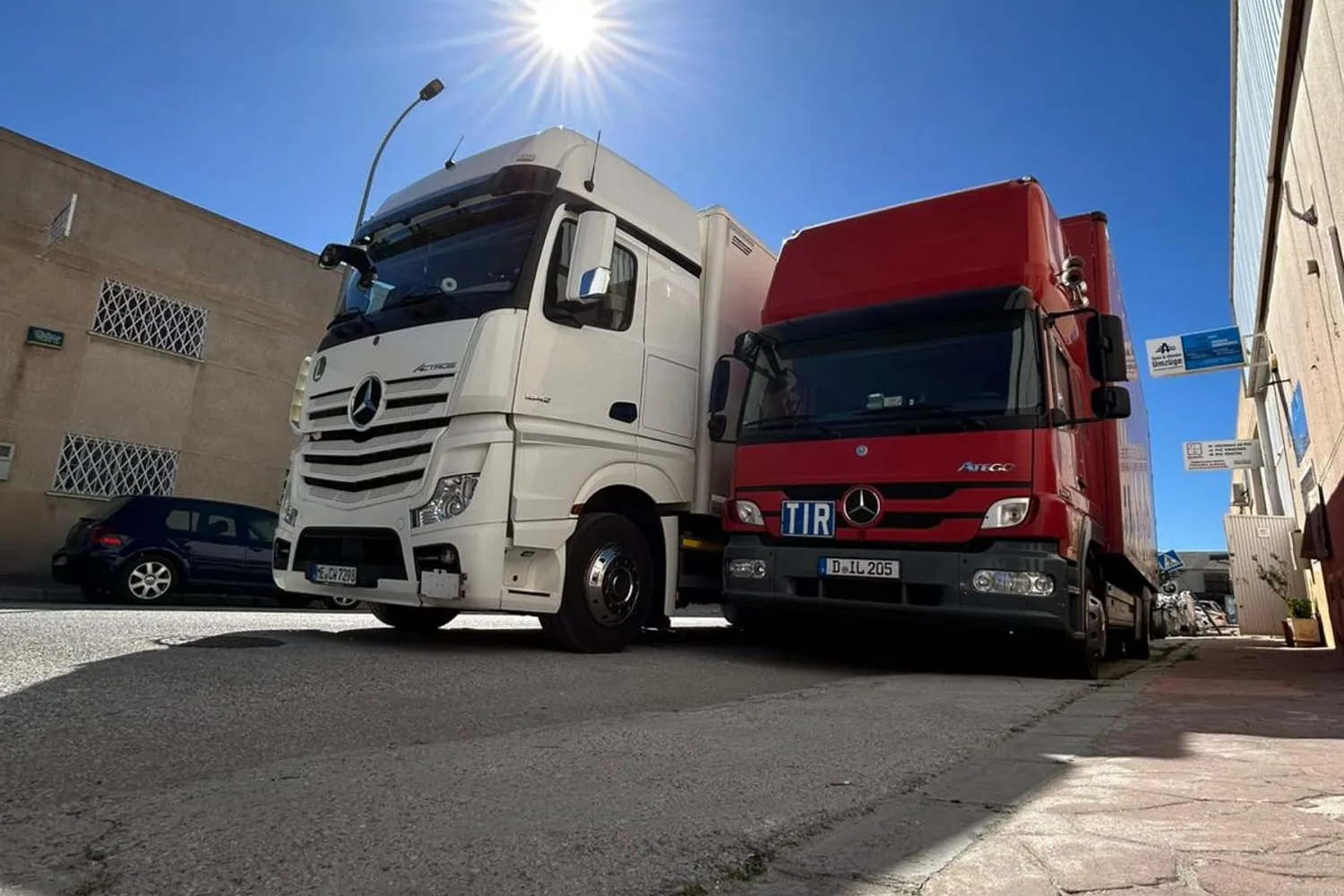
Vehicle transport
Cars and motorbikes to Spain — and what comes next
Bringing the vehicle over is the easy part. The hard part comes afterwards: registering it in Spain. Both are here, because one without the other is not much use.
- 0 km
- added to your odometer
- Cars & bikes
- motorbikes secured on dedicated mounts
- 30 days
- is your window to register in Spain
Drive it down, or have it transported?
It is about 2,400 kilometres from Düsseldorf to Málaga. You can drive it — but hardly anyone does that sum honestly.
What driving it really costs
Fuel and tolls for 2,400 kilometres, at least one night on the road, two or three days of your time, and the wear that shows up later in the resale value.
And what else it costs you
You arrive after two days of motorway on the very day the removal truck is unloaded. That is exactly the day you want to be rested and able to decide where everything goes.
If the vehicle travels with us
It sets off together with your belongings and is there when you arrive. Without a single extra kilometre.
What many people find out too late
Registering in Spain, and the tax you may not have to pay
Once you are registered as resident in Spain, the vehicle has to be registered here too. Doing so normally triggers the Spanish registration tax: between 4.75 % and 14.75 % of the vehicle’s value, depending on value, engine size and emissions. On a €30,000 car that is €1,400 to €4,400. There is an exemption when you change residence — and it depends on meeting deadlines.
6 months before
The vehicle must already be yours
For the exemption you must have owned and used it for at least six months before the move. A car bought just before you leave does not qualify.
On moving
Register as resident in Spain
Everything else starts from that registration. The clocks begin there.
Within 30 days
Start the re-registration
A resident still driving on German plates after that risks fines — the figures quoted range from €200 to €500.
Within 12 months
Registration completed
And then keep the vehicle for twelve months. Sell it sooner and the exemption is lost retroactively.
What else to budget for
Besides the tax there are the usual items: a DGT fee of around €100–110 for cars and €27–30 for motorbikes, plates at €15–40, and an environmental sticker at €5–15. On top of that, the Spanish roadworthiness test and insurance.
We are movers, not tax advisers. This is orientation so you know what to ask about; only a gestoría or a local tax adviser can settle it bindingly. Do ask us — we will tell you who people around here normally go to.
The question almost nobody asks first
What is your vehicle worth while it travels?
With furniture everyone thinks about it. With the car almost nobody does — and in most moves it is the single most valuable thing going.
Basic liability is worked out per cubic metre
Moving transport is liable at 620 euros per cubic metre. For a wardrobe that adds up. For a vehicle, which packs a lot of value into very little space, it almost never does — and that is something people only ever find out afterwards.
Which is why we raise it beforehand
For a vehicle the sum can be lifted to its real value. That has to be settled before loading, not after. Just tell us what the car is worth today; the rest takes two sentences.
Five minutes that are yours to do
Photograph the vehicle from all four sides on handover day, and the odometer with it. Keep the documents and the spare key, and leave nothing loose inside. If anyone later wants to argue about a scratch, the argument lasts thirty seconds.
Motorbikes are held, not lashed down
They stand in dedicated mounts rather than being strapped down over the handlebars. The difference sounds small and it is exactly the one between "tied on" and "secured": a fork held under tension for days does not arrive the way it left.
Is the vehicle coming along?
Tell us what the vehicle is and when your move is due. We will tell you whether it fits on the same run and what it costs.